
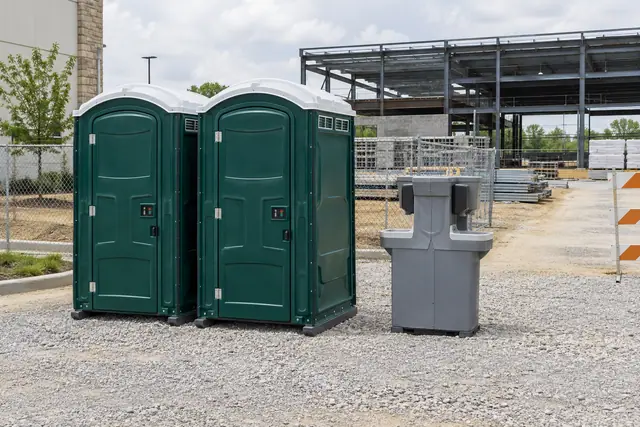
Choose the equipment around the actual crew need
Explain the people using the site, their operating period and any usable permanent bathrooms. Compare ordinary cabins, personal washing and relevant access-focused functions. Ask about the actual equipment’s entry and service requirements so the space is planned around what will be supplied. A rough rectangle on a site plan does not capture every part of practical operation.
Show what will surround the facility
Tell the provider and site lead where temporary fences, gates, stock and other equipment are expected to go. Have the complete arrangement reviewed before those items make the toilet entrance or service approach unusable. Keep emergency and operational decisions with the responsible site team. Do not attach screening, braces, fencing or stored objects to hired sanitation equipment without explicit provider approval.
Keep the accepted access functioning during the work
Give receiving staff the current position and contact for a site conflict. If a barrier or material stack later changes the arrangement, report it before the next required service visit. Ask for an accepted solution rather than towing or lifting the unit with site machinery. Workers should not have to treat an improvised gap in fencing as their regular bathroom route.
Plan removal while the site still allows it
Ask how collection will be arranged and retain the accepted approach until the equipment is removed. A final fence line, landscaping stage or handover should not quietly trap the unit in place. Provide the actual Pleasant Grove location and dates for review. This guidance does not approve a site layout, specify engineering dimensions or guarantee a particular vehicle can reach the proposed position.
Questions before you book
Can temporary fencing be installed around the unit after delivery without review?
Explain the proposed arrangement first. The equipment entrance and provider access must remain workable; do not attach or move hired equipment on your own.